لطفا منتظر بمانید ...
0% Complete
|
ورود به سامانه
|
ایجاد حساب کاربری
صفحه اصلی
/
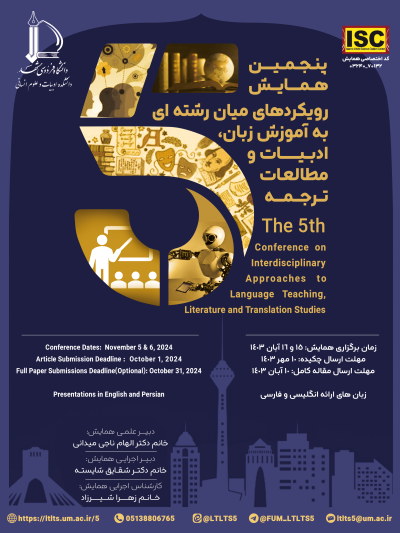
پنجمین همایش رویکردهای میان رشته ای به آموزش زبان، ادبیات و مطالعات ترجمه
Existence of Death in To the Lighthouse: An Existential Psychotherapeutic Reading
نویسندگان :
Katayoun Tavakoli Neyshabour
1
Omid Ghahreman
2
1- دانشگاه خیام
2- دانشگاه خیام
کلمات کلیدی :
Existential Psychotherapy،To the Lighthouse،Death،Yalom،Woolf
چکیده :
To die is to lose the ability of living and this can bring a huge sense of fear to anyone. The existential psychotherapy, thus, is using the experience of living and dying to create a therapeutic approach. The focus of existential psychotherapy is on the concerns rooted in the existence of human beings. This kind of therapy, first inspired by Martin Heidegger’s Existentialism has several founders and developers among whom Irvin Yalom is an outstanding figure. As the focus of Existentialism is on how it is to be in this world and how it means, the focus of existential psychotherapy is also on the concerns rooted in the existence of human beings. Based on existential psychotherapy people mostly take two modes to face or fight with death: specialness and ultimate rescuer. Since this is death that gives meaning to life, “to be or not to be” is then the matter with which human being is tied up consciously or unconsciously every day. Yalom emphasizes four existential phenomena: death, isolation, freedom, and meaninglessness. What is going to be studied in this essay is the existential psychotherapeutic issue of death in Virginia Woolf’s To the Lighthouse. In the lives of the three major characters, Mr. Ramsey, Mrs. Ramsey, and Lily Briscoe, death has an important role in the way of their livings. I will take Yalom’s modern psychotherapy in a humanistic approach to analyze and search through Woolf’s modernistic novel To the Lighthouse.
لیست مقالات
لیست مقالات بایگانی شده
A BOURDIEUSIAN READING OF HABITUS IN WHITE NOISE
Erfan Bandad - Farah Ghaderi
Absurdity in Conversation: Stylistic Analysis of Absurdity in Tom Stoppard's Rosencrantz and Guildenstern Are Dead (1967) and its Characterization
Parsa Mashayekhy Fard - Ali Nasrabadi
Narratology and Ethical Philosophy in Arundhati Roy’s The Ministry of Utmost Happiness: An Interdisciplinary Study
Fatemeh Pourjafari
Enhancing L2 Writing: A Comparative Study of ChatGPT and Grammarly as Automated Written Corrective Feedback`
Maryam Sadat Ahmadi
Analyzing Teacher's Perspective and Purposes of Using Chat GPT in EFL Classes in Iranian Institutes
Omolbanin Shahmohammadi
Psychogeography in Alan Moore's From Hell
Mohammad Sadegh Zadboom
Computer-assisted and AI-assisted Critical Discourse Analysis: Using Digital Technologies to Uncover Power Relations and Inequality in Language
Reza Khany - Mohammad Mahdi Maadikhah
Resistance to Learning English among Iranian Ph.D. Students: The Case of Non-English Majors in Focus
Zahra Latifirad - Mehrdad Amiri - Hossein Khodabakhshzadeh - Hamid Ashraf
نقشِ مکتب شهید سلیمانی در پرورشِ نسلِ بیدار: واکاوی پی نمای از چیزی نمی ترسیدم (1401) بر پایه الگوی نودِلمَن
محمد هادی جهاندیده - رباب آدم زاده
هوش مصنوعی و خلق ادبیات: تحلیل ابزارهای تولید متن و تأثیرات آنها بر خلاقیت ادبی
آزاده مهرپویان
بیشتر
ثمین همایش، سامانه مدیریت همایش ها و جشنواره ها - نگارش 44.12.3